
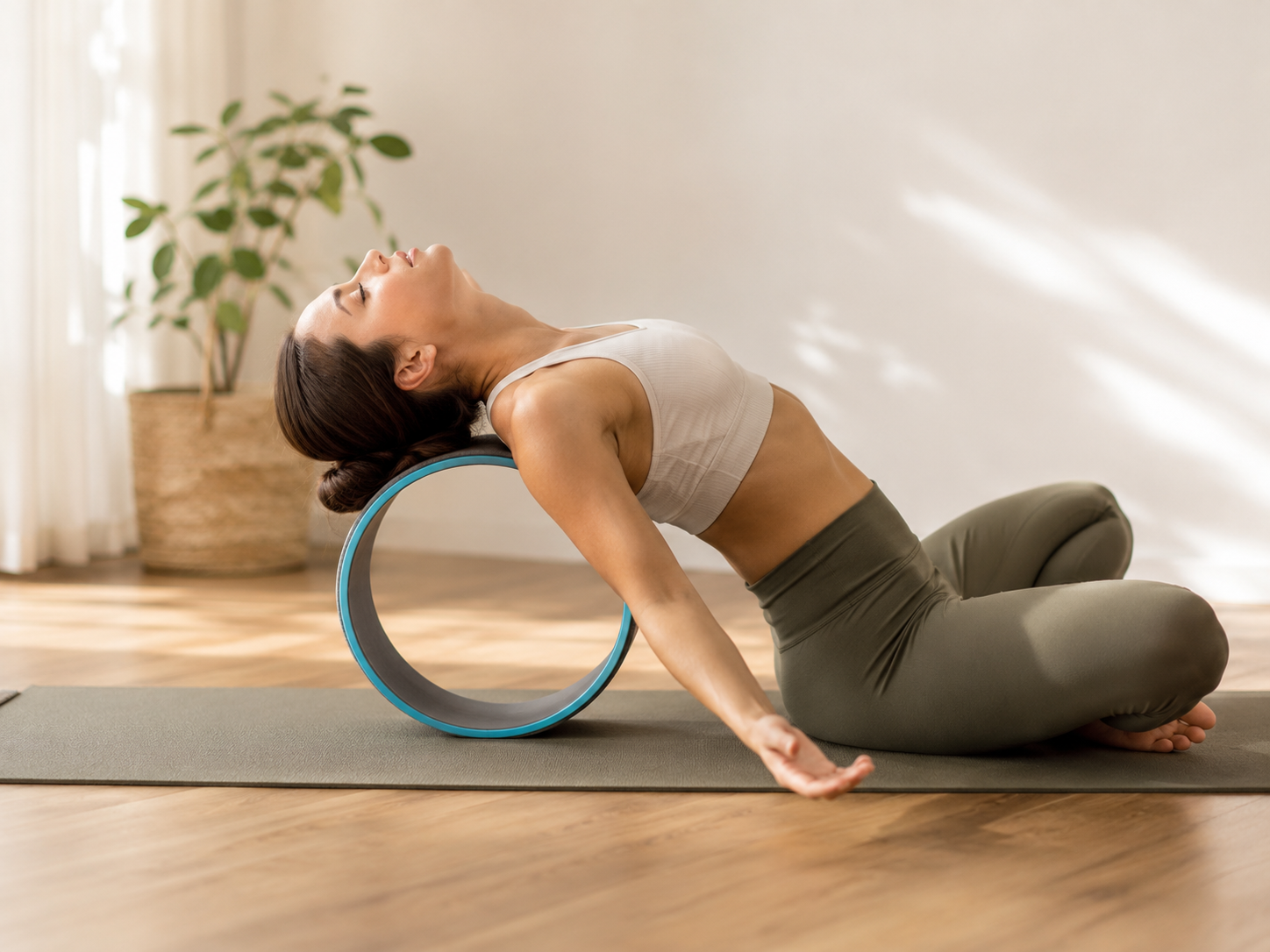
Nesting Yoga Wheel Set — Large + Small Back Roller w/ Optional Wall Holder
$36.00 & Free Shipping
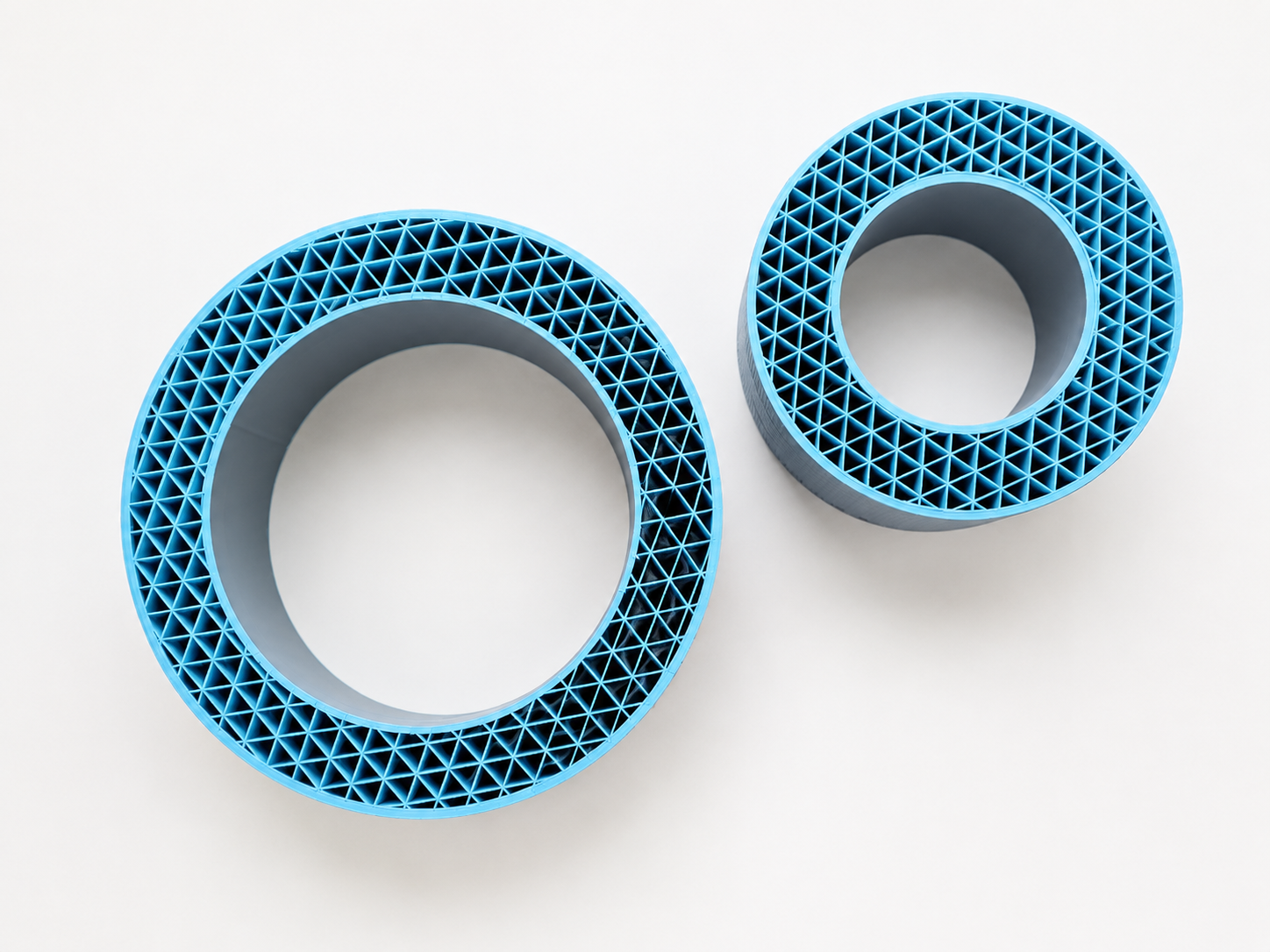
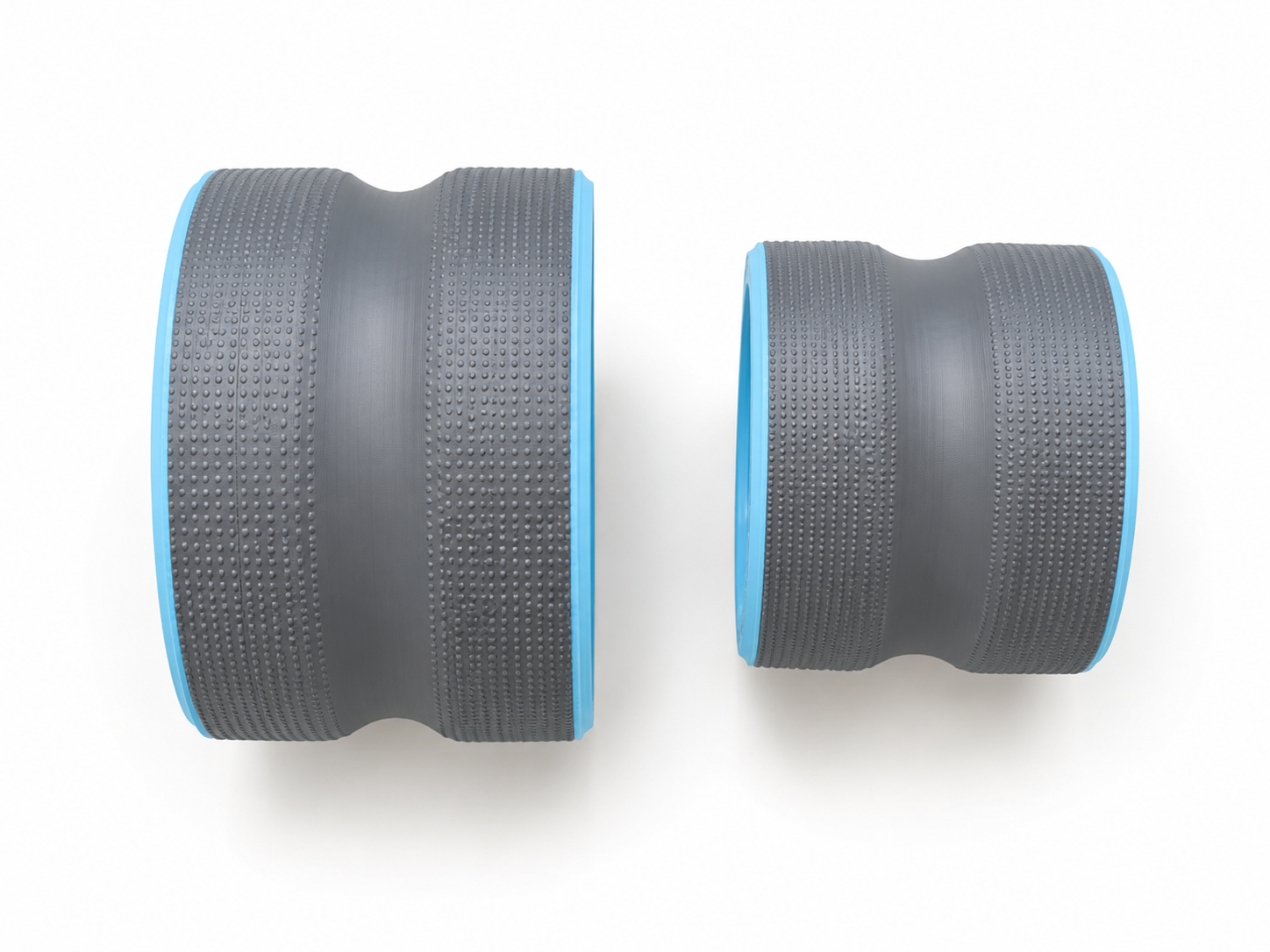
Both wheels — because they do different jobs. The large 9″ opens your whole mid-back with a long, gentle arc. The small 6″ concentrates on the upper back, shoulder blades, and base of the neck.
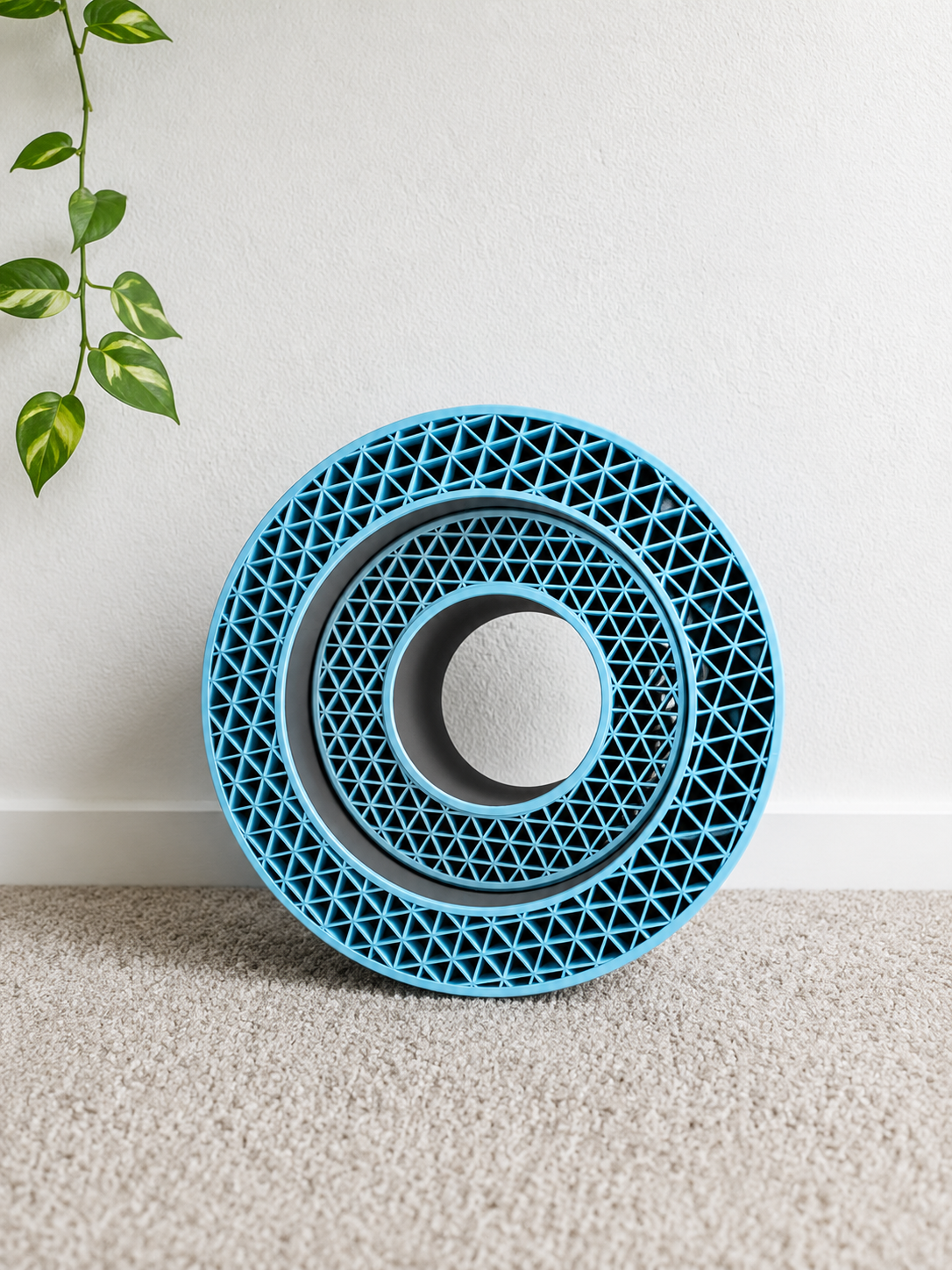
Open everything with the large wheel, then take the small one to whatever still feels stuck. When you’re done they nest into a single compact stack instead of two things rolling around the floor.
Best value vs buying separately · Holds up to 250 lb
Free shipping on orders over $75!
- Satisfaction Guaranteed
- No Hassle Refunds
- Secure Payments
Description
Why use a yoga wheel?
Most of us spend the day folded forward — at a desk, in a car, over a phone. The upper back settles into a long C-curve, the chest and shoulders close in, and the muscles along the front of the body shorten while the mid-back stiffens up. A yoga wheel works in the opposite direction.
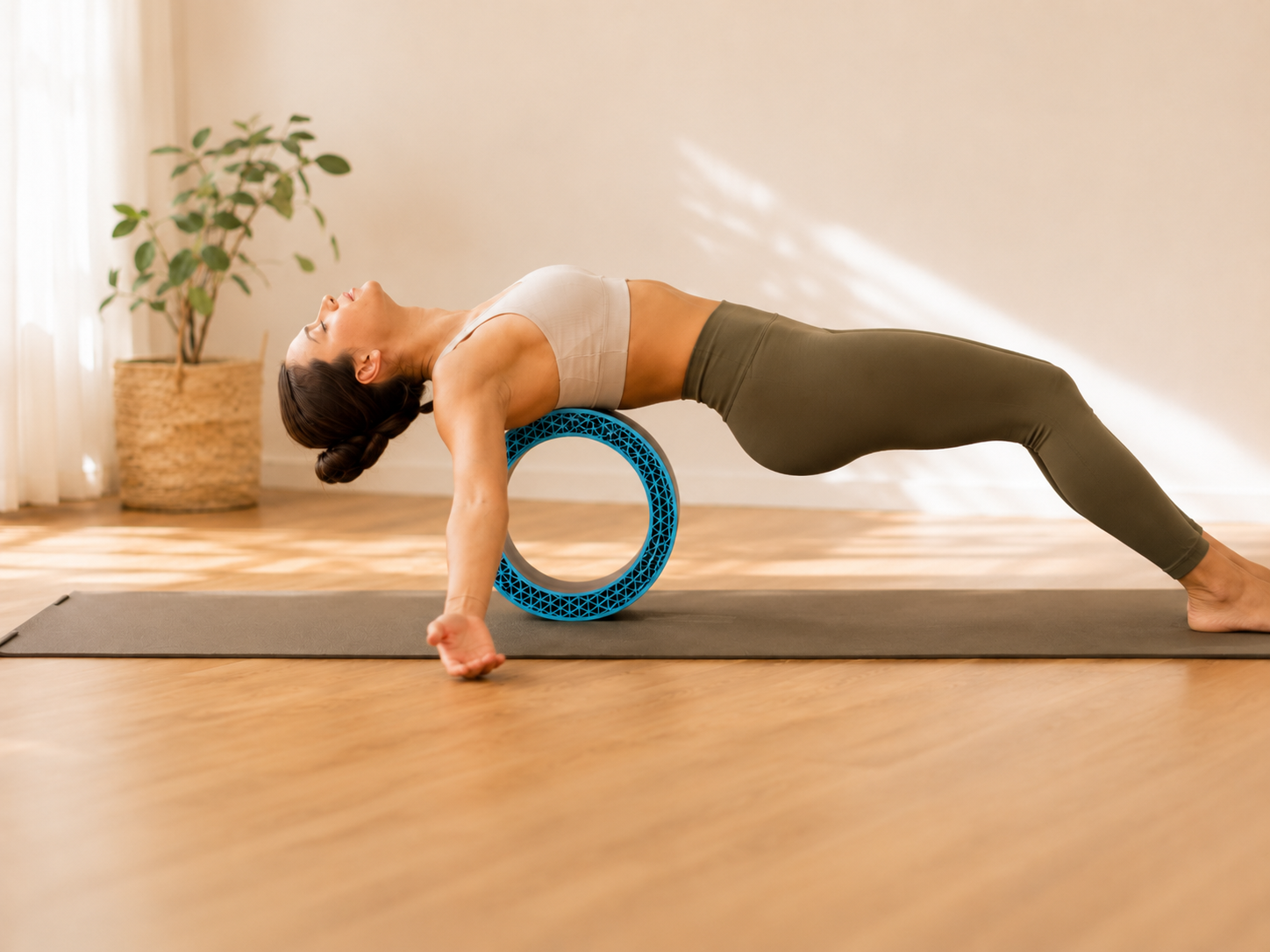
You lie back over it and let gravity do the work. The spine extends over a smooth, supported arc, the chest opens, and the muscles running along the spine get a slow, sustained stretch that’s genuinely hard to reach on a flat mat. That’s the real difference: instead of stretching your back, you give it something to open over. The wheel carries your bodyweight through the movement, so you can relax into the position rather than holding yourself up.
Why the set
The two wheels aren’t big and small versions of the same thing — they do different jobs, and that’s the whole argument for owning both. The large wheel opens broadly; the small one works locally. Together they cover the entire mid-back, from the base of the ribs to the base of the neck.
And when you’re done, the small wheel tucks inside the large one, so the pair stores as a single compact stack instead of two things rolling around your floor.
Large vs small: what actually changes in your body
Both wheels extend the spine. What differs is the radius of the arc — and that one variable changes where the stretch lands, how many vertebrae share the work, and how strong it feels.
| Large — 9″ | Small — 6″ | |
|---|---|---|
| The arc | Long and shallow | Short and sharp |
| How the bend is shared | Spread across many vertebrae at once | Concentrated into a few segments |
| Contact with your back | Wider patch, pressure spread out | Narrower patch, more pressure per inch |
| Where you feel it | The whole mid-back, plus chest and front of shoulders | Upper back, between the shoulder blades, base of the neck |
| Height off the floor | Taller — more range to lean into, more balance required | Lower — easier to get on and off |
| How it feels | Broad, supported opening | Pointed and specific |
The part that surprises people
The small wheel is the more intense of the two. It’s easy to assume the bigger wheel is the harder one, but the opposite is true. A tighter radius presses the same bodyweight through a smaller contact area and asks fewer joints to absorb the same amount of extension — so it feels sharper and more local. The 9″ wheel distributes that work; the 6″ concentrates it.
That’s why most people start on the large wheel and add the small one later, once extension through the mid-back feels easy.
In plain anatomy
The large 9″ wheel works the thoracic spine as a whole — the twelve vertebrae your ribs attach to, which are built to extend and rotate but rarely get asked to. Because your torso sits higher off the floor, it also opens the chest, the front of the shoulders, and (kneeling) the hip flexors and quads.
The small 6″ wheel works higher and more locally: the upper thoracic spine and the junction where it meets the neck, plus the band of muscle between the shoulder blades. That’s the region a monitor pulls forward all day, and it’s the spot most desk workers can point to with one finger.
Used together, you open broadly with the large wheel, then take the small one to whatever still feels stuck.
How it helps your back feel better
Sitting for hours keeps the spine parked in one position and the muscles around it static. A few minutes over the wheel does three straightforward things:
- Moves the mid-back through a range it rarely visits. The thoracic spine is built to extend and rotate, but a day at a keyboard asks it to do neither.
- Opens the chest and the front of the shoulders, so the shoulders can settle back where they belong instead of rounding forward.
- Gives the muscles along the spine a sustained stretch with your bodyweight behind it, which helps them let go rather than fighting you.
Most people feel it most in the upper back and shoulders — exactly where a day at a desk tightens. A few minutes is plenty. Consistency matters far more than intensity.
Getting started
- Begin with the large wheel. Sit with it against your lower back, feet flat, hands supporting your head.
- Lean back slowly, let the wheel take your weight, and roll gently through the mid-back for 30–60 seconds.
- Switch to the small wheel and rest it under whatever area still feels tight.
- Stay for a few slow breaths. Don’t force it — and stay off your neck.
- Tuck your chin and push through your legs to come up.
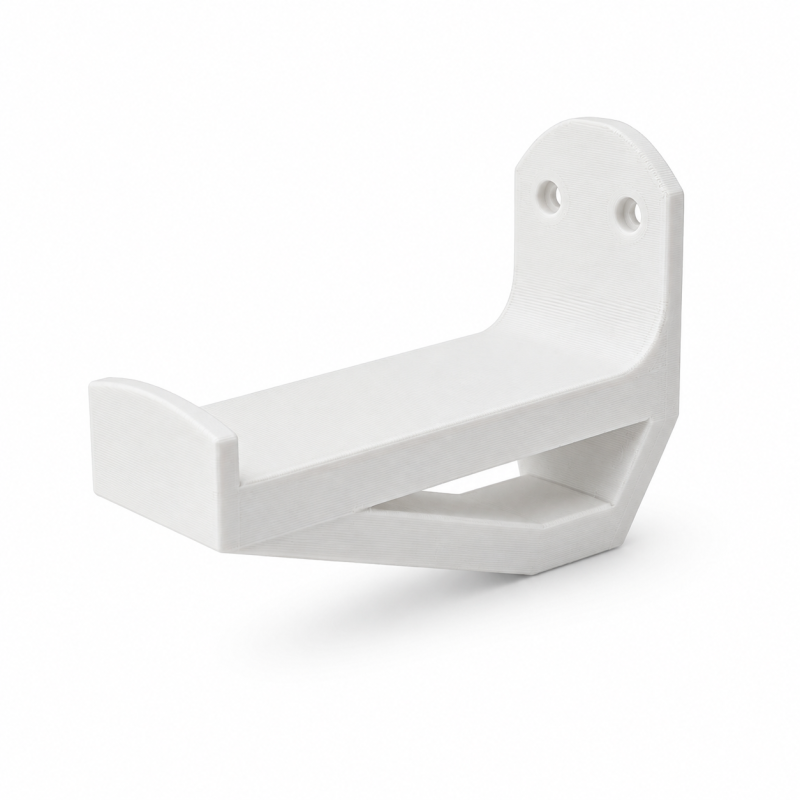
Add the wall holder to keep them off the floor and in sight — the ones you can see are the ones you actually use.
Specs
- Large: 9 in dia × 5⅛ in · Small: 6 in dia × 5⅛ in
- Nests into one compact stack · Best value vs buying separately
- Material: durable PETG · Holds up to 250 lb
Please use safely
Rated for users up to 250 lb. Inspect before each use and stop using it at any sign of cracking or separation. Keep away from heat and direct sunlight (don’t leave it in a hot car).
Move slowly and stay off your neck — support your head with your hands when you lean back. Never force an arc that hurts; a stretch should feel like a stretch, not a pinch.
This is exercise equipment, not a medical device, and nothing here is medical advice. It is not intended to diagnose, treat, cure, or prevent any condition. If you’re pregnant, have osteoporosis, or have a back, neck, or shoulder injury — or you’re recovering from surgery — talk to your doctor or physical therapist before using a yoga wheel.
Shipping is calculated at checkout from your address.
Additional information
| Weight | 2.6 lbs |
|---|---|
| Dimensions | 9 × 9 × 6 in |
| Color | Gray / Light Blue, Black / Light Blue |
Related products
-
-
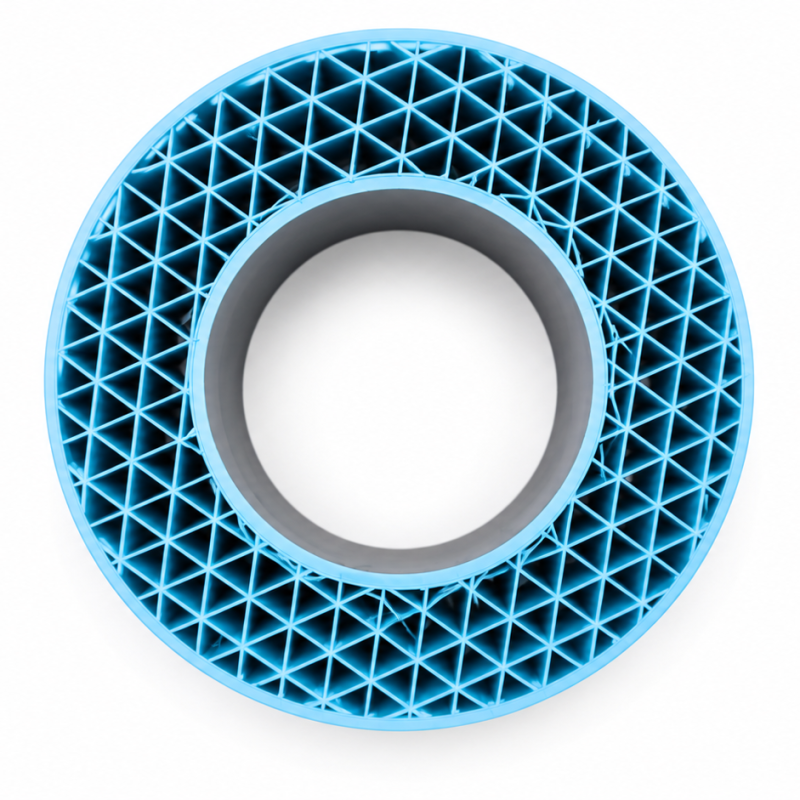
Yoga Wheel — Small (6″) Back Roller for Upper Back & Neck
$18.00Select options This product has multiple variants. The options may be chosen on the product page -
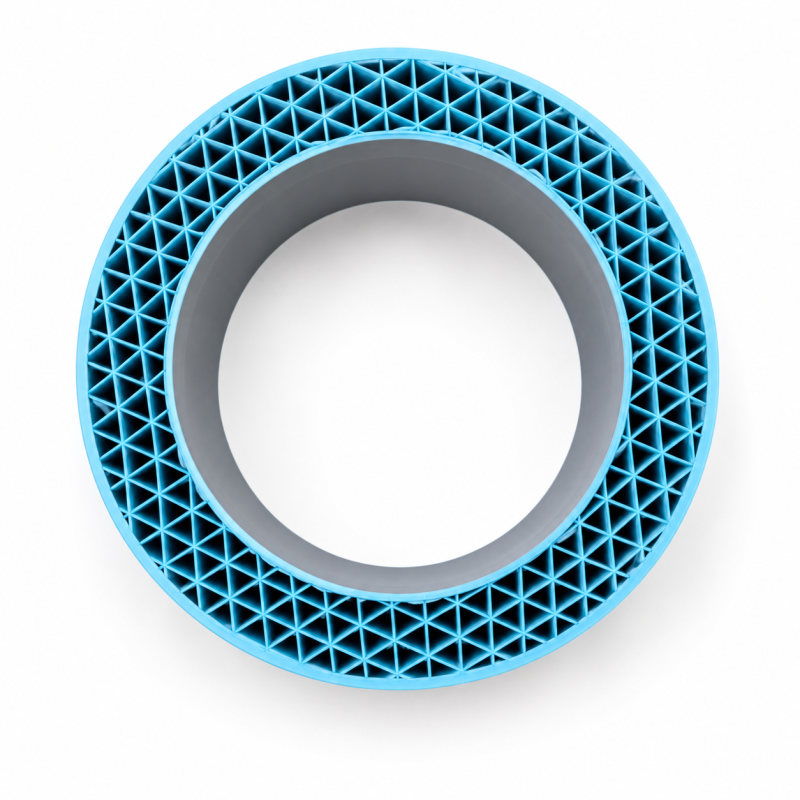
Yoga Wheel — Large (9″) Back Roller for Back Extension & Chest Opening
$25.00Select options This product has multiple variants. The options may be chosen on the product page -
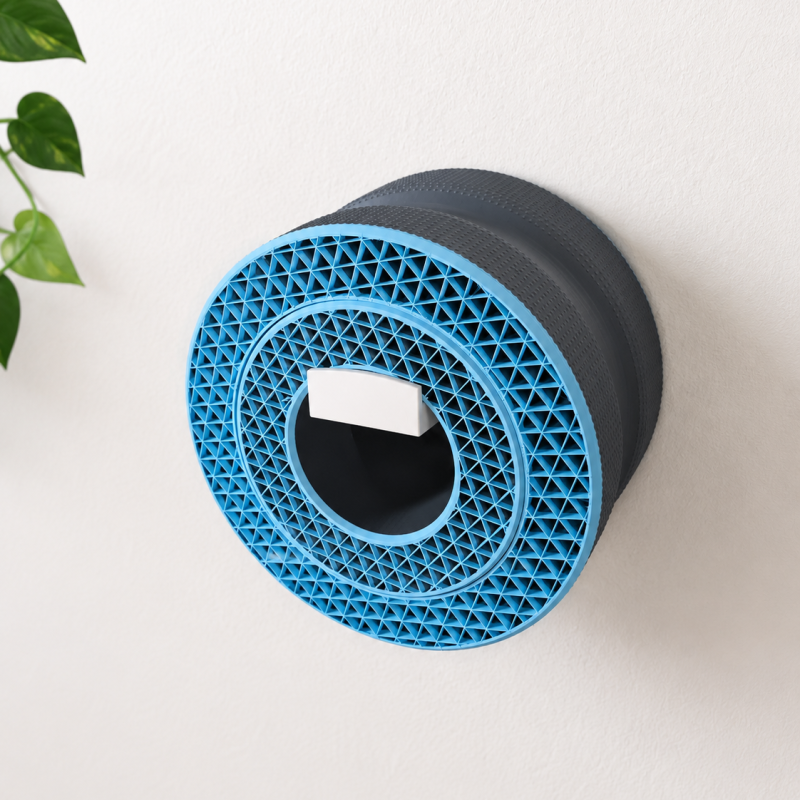
Nesting Yoga Wheel Set + Wall Holder — Full Bundle (Large + Small + Mount)
$41.00Select options This product has multiple variants. The options may be chosen on the product page